
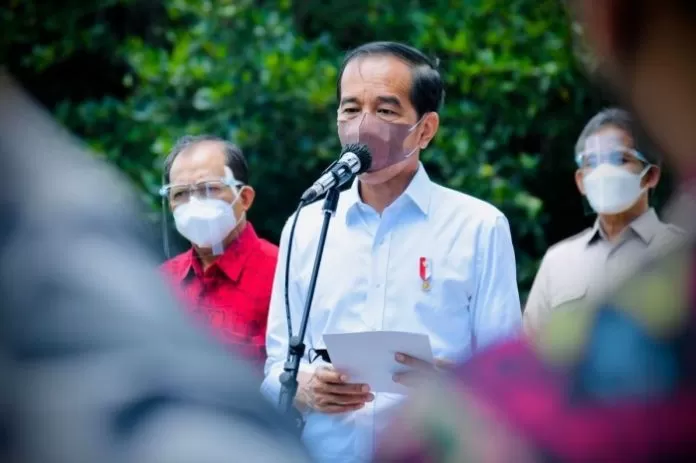
Joko Widodo has failed to fulfill his potential as Indonesia’s leader.
When he took office for his first term as Indonesian president in 2014, Joko Widodo, or Jokowi, was the greatest hope for reform since the period right after the collapse of the Suharto regime. The first Indonesian president in the democratic era not to have come from the elite, Jokowi had been a small businessperson, and then an effective mayor of Solo and then Jakarta.
During his mayoral terms, he had established a reputation for being personally clean, and for rooting out corruption and inefficiency within the local governments he oversaw. He acted in a direct, down-to-earth manner, and did not broadcast plans to entrench other members of his family in politics. As Ben Bland of the Lowy Institute notes, Jokowi praised his children for having their own businesses and said “Becoming a president does not mean channeling power to my children.”
On the 2014 campaign trail, Jokowi presented himself as an avatar of reform. Many Indonesians saw him — as I did as well — as fundamentally different from former presidents Megawati Sukarnoputri, who governed in an almost regal style and helped entrench her daughter in politics, and Susilo Bambang Yudhoyono, a former general who also governed in a somewhat aloof manner, and did little to fight corruption; Yudhoyono also wound up trying to create a family political dynasty. (Some of Yudhoyono’s ministers wound up being indicted by the country’s anti-corruption commission.) After his 2014 victory, Time featured Jokowi on its cover, calling him “The New Face of Indonesian Democracy.”
The fact that Jokowi defeated former lieutenant general Prabowo Subianto for his first term in office further added to Jokowi’s seeming credentials as a reformer and bulwark of democracy. On the campaign trail, Prabowo made no secret of his disdain for aspects of Indonesian democracy, and Prabowo also carried with him accusations of overseeing rights abuses during the Suharto era.
Today, as Jokowi closes his second term in office, having defeated Prabowo handily in a rematch, he is a long way from that supposed reformer and seeming savior of Indonesian democracy. Like his two predecessors, he seems to want to create a family political dynasty, despite what he said in the past. He maneuvered one of his sons and son-in-laws into politics, and they are now both mayors and up-and-comers, with their father’s backing.
Meanwhile, Jokowi has overseen a crippling of the country’s efforts to combat corruption, leaving Indonesia with just as deep-rooted, if not more deep-rooted, problems with graft than when he took office. In fact, he has done nothing as the anti-corruption commission has been hollowed out. In his second term, he has built an ever-closer alliance with the armed forces, and even made Prabowo his defense minister; he also has overseen a crackdown on civil society and speech.
Now, Jokowi may want to try to push through constitutional changes. He claims these constitutional amendments are minor, but speculation (which he denies) suggests he may try to change the constitution to be able to run for a third term. That would be the ultimate insult to Indonesian democracy.
What happened in Jokowi’s two terms that led him to the place he is today? Or was he always, in some ways, misunderstood, as Ben Bland of the Lowy Institute says in some parts of his excellent biography of Jokowi. In my next post on the Jokowi years, I’ll examine how the promise of 2014 curdled.
This article was previously published in Council on Foreign Relations on 8 October 2021 and is published here with the permission of the author. The views expressed in this article are those of the writer and do not necessarily reflect those of PinterPolitik.


Ingin tulisanmu dimuat di rubrik Ruang Publik kami? Klik di bit.ly/ruang-publik untuk informasi lebih lanjut.